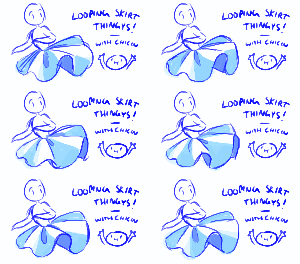
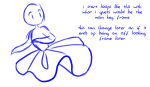
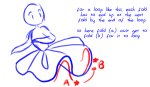
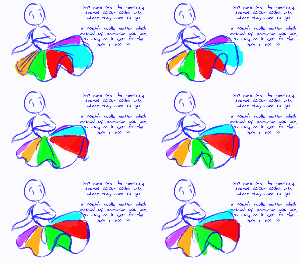
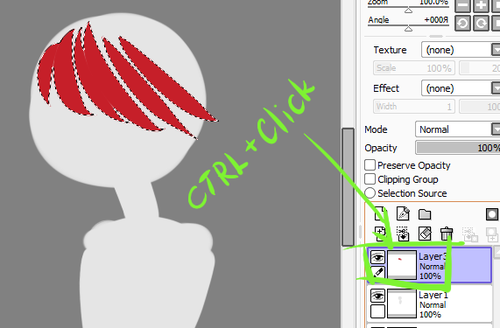
Sort of follow up from the hair tutorial yesterday, mixing in a bit of this quick tutorial too. Hopefully this is easy enough to understand one of those things that can change a lot depending on the animation.
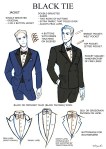
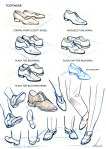
I’ve been studying the classic black tie dress code (mainly from here) so I thought I could share my notes. Maybe they can be helpful to someone else, too. If I made any mistakes or things are really confusing please tell me. I also have some notes on white tie which I could share as well…
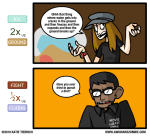
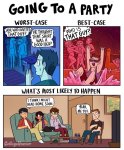
Worst Case vs. Best Case Scenarios by Karina Farek.
This is a great joke, but it’s also a wonderful strategy for reducing anxiety that I learned about in therapy. If you’re ever nervous about something, just ask yourself: what’s the best thing that can happen? What’s the worst thing? What will most likely happen?
It does wonders for your nerves, really does.
My counsellor walks me through this all the time and it works??
Since TV animation tends to have smaller budgets than feature animation, we are often times limited in the kind of animation we can do in terms of backgrounds. Here are a couple workarounds I have to show movement in a background.
The first is a tracking shot into cam where our Character is running without gaining away or from cam (but they could if you wanted) The foreground is the ground plane which is just a simple looping set of lines. The BG is actually a static image that would slowly drift down towards the horizon line imitating movement away from the background.
The second is also a tracking shot where the character is more in profile. This one requires some soft focus and low detail background drawings (usually not a lot, maybe 3 looping images. I only used 2 here but the theory holds.
The last one only requires a single background layout, but we use the camera to imitate action as it pulls out over a static image.
This is all based on my own experience rather than hard rulesets, so you know as usual take it with a grain of salt.
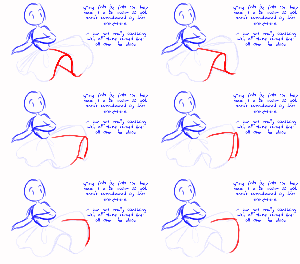
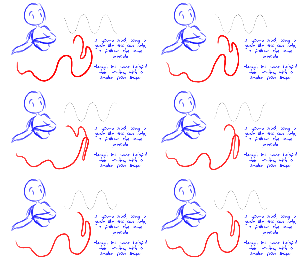

one of those things that can change a lot depending on the animation.
















 ringsabel